How to Choose the Right Tech Stack for Your SaaS MVP (Without Wasting Your Entire Runway)
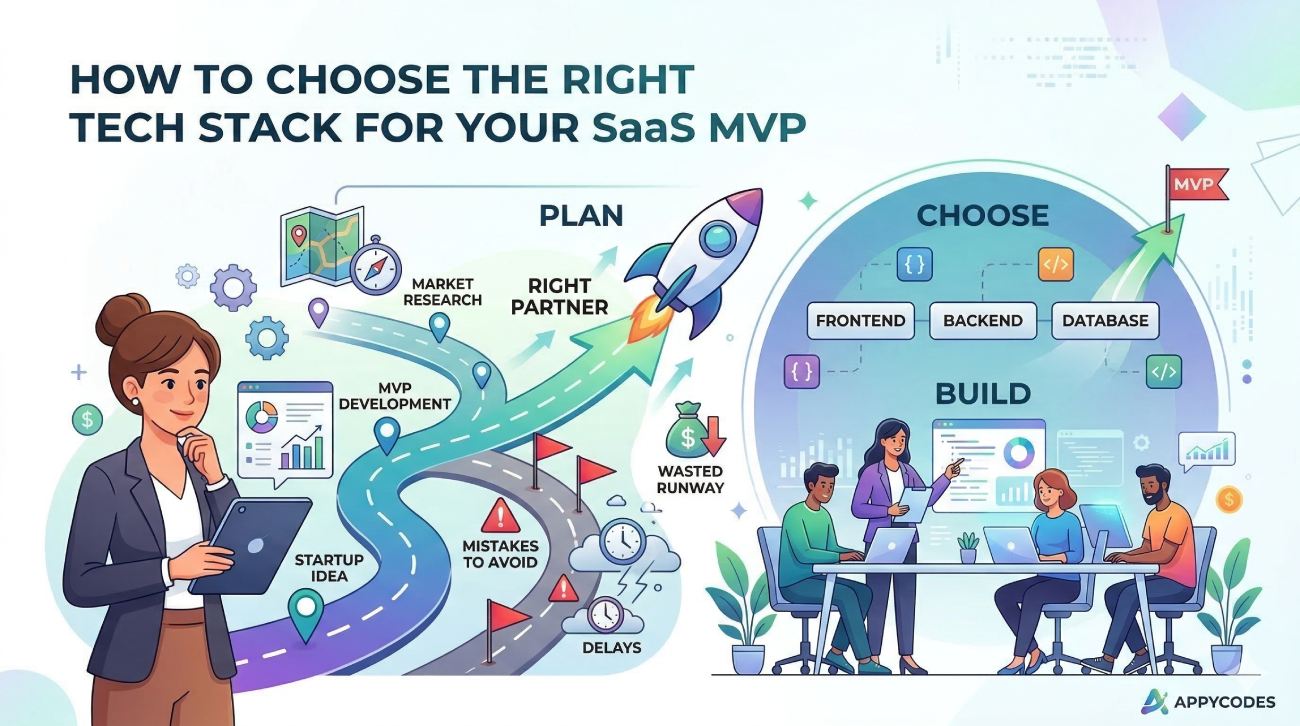
Choosing the best tech stack for building SaaS MVP is one of the most important decisions you'll make as a founder. Get it right, and you launch fast, iterate quickly, and conserve cash. Get it wrong, and you burn months—and budget—rewriting code, fixing scalability issues, or replacing your entire backend.
This guide is for startup founders, business owners, and decision-makers who want to build a SaaS product efficiently without overengineering or overspending.
We'll cut through the noise and focus on what actually matters: speed, scalability, cost, and long-term flexibility.
Why Your Tech Stack Choice Can Make or Break Your MVP
Your MVP isn't your final product—it's your fastest path to validation. But your tech stack still matters because:
- It determines how quickly you can launch
- It affects development and hiring costs
- It impacts scalability and performance
- It influences how easy it is to pivot
Many founders make one of two mistakes:
- <strong>Overengineering:</strong> choosing complex, "enterprise-grade" stacks too early
- <strong>Undershooting:</strong> picking tools that can't scale beyond a prototype
The goal is balance—not perfection.
What "Best Tech Stack for Building SaaS MVP" Actually Means
There is no universal "best" stack. The right choice depends on your:
- Product complexity
- Time-to-market goals
- Budget constraints
- Team expertise
- Expected scale in the next 12–18 months
Instead of chasing trends, focus on stacks that help you:
- Ship fast
- Maintain easily
- Scale when needed (not prematurely)
Core Components of a SaaS Tech Stack
Before picking tools, understand the layers you're deciding on:
1. Frontend (User Interface)
- React (most common for SaaS)
- Next.js (great for performance + SEO)
- Vue (simpler learning curve)
2. Backend (Logic + APIs)
- Node.js (fast, scalable, popular)
- Django (secure, rapid development)
- Ruby on Rails (great for MVP speed)
3. Database
- PostgreSQL (reliable default choice)
- MongoDB (flexible schema)
4. Infrastructure / Hosting
- AWS (flexible, scalable)
- Vercel (great for frontend apps)
- DigitalOcean (simpler, cost-effective)
5. Authentication & Payments
- Auth0 / Firebase Auth
- Stripe for subscriptions
Keep it simple. Your MVP doesn't need 15 services.
Best Tech Stack for Building SaaS MVP (Recommended Setups)
Here are proven combinations used by successful startups:
Option 1: Fast Launch Stack (Most Recommended)
- Frontend: Next.js
- Backend: Node.js (Express or NestJS)
- Database: PostgreSQL
- Hosting: Vercel + AWS
Why it works: Fast development, strong community, scalable, and easy to hire for.
Option 2: Rapid MVP with Minimal Backend
- Frontend: React / Next.js
- Backend: Firebase / Supabase
- Database: Firestore / Supabase DB
Best for: Early validation, small teams, limited budget
Tradeoff: Less flexibility long-term
Option 3: AI-Powered SaaS
- Frontend: Next.js
- Backend: Python (FastAPI)
- AI Integration: OpenAI / custom ML models
If your product relies heavily on AI, choosing the right architecture early is critical. Working with an AI app development company can help you avoid costly rework later.
How to Choose Based on Your Business Goals
Don't start with tools—start with outcomes.
If Speed is Your #1 Priority
- Use Next.js + Firebase or Supabase
- Avoid custom backend logic initially
If Scalability Matters Early
- Go with Node.js + PostgreSQL
- Use modular architecture from day one
If You're Building a Mobile-First SaaS
- Use React Native or Flutter
- Share backend with web app
If mobile is core to your product, working with a mobile app development company ensures your architecture supports both platforms without duplication.
Common Mistakes That Drain Your Runway
1. Choosing Based on Trends
Just because a stack is popular doesn't mean it's right for your product.
2. Overengineering Too Early
You don't need microservices for an MVP. A monolith is faster and cheaper.
3. Ignoring Developer Availability
If you pick a niche stack, hiring becomes expensive and slow.
4. Building Everything From Scratch
Use existing tools for:
- Authentication
- Payments
- Email systems
5. No Plan for Scaling
You don't need to scale now—but your stack shouldn't block you later.
Cost Considerations (What Founders Often Miss)
Your stack affects more than just development cost.
Development Cost
- Simple stack: $15K–$40K MVP
- Complex/custom stack: $50K–$150K+
Maintenance Cost
- More services = higher monthly cost
- Complex architecture = more developer hours
Hiring Cost
- Popular stacks = cheaper talent
- Niche stacks = expensive specialists
This is why many founders partner with a web development company to avoid costly missteps early on.
How to Future-Proof Your MVP (Without Overbuilding)
You don't need enterprise architecture—but you do need smart foundations.
- Use modular code structure
- Choose scalable databases (PostgreSQL is a safe bet)
- Avoid vendor lock-in where possible
- Document your architecture early
Think "ready to scale," not "built for millions of users on day one."
Practical Decision Framework
If you're unsure, use this quick filter:
- <strong>Need speed?</strong> → Next.js + Firebase
- <strong>Need flexibility?</strong> → Node.js + PostgreSQL
- <strong>AI-heavy product?</strong> → Python + FastAPI
- <strong>Mobile-first?</strong> → React Native + shared backend
Keep your stack boring, proven, and easy to maintain.
Get Expert Input Before You Commit
Choosing your stack isn't just a technical decision—it's a business one. A short consultation with experienced engineers can save months of rework and thousands in cost.
If you're unsure, getting a second opinion before development starts can make a huge difference.
Conclusion: Build Smart, Not Fancy
The best tech stack for building SaaS MVP isn't the most advanced—it's the one that helps you launch fast, learn quickly, and iterate without friction.
Focus on:
- Simplicity over complexity
- Speed over perfection
- Flexibility over trends
Your MVP is a learning tool, not a finished product.
Ready to Build Your SaaS MVP the Right Way?
If you want to avoid costly mistakes and launch faster with the right architecture from day one, Appycodes can help.
From product strategy to development and scaling, we build SaaS products that are designed for growth—not rework.
Contact Appycodes today to discuss your MVP and get expert guidance on choosing the right tech stack.