How to Choose a SaaS Development Partner for Your Startup: Cost, Tech Stack, and Timeline Explained
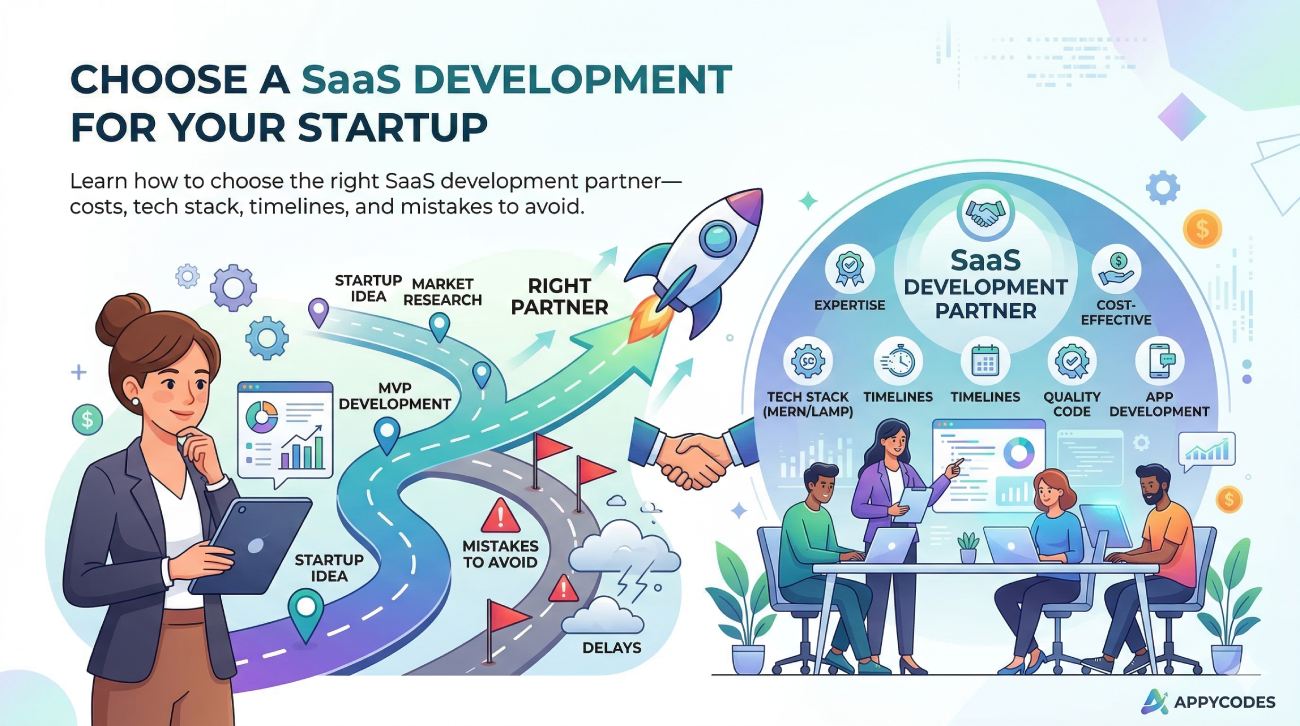
Choosing the right partner can make or break your product. If you're figuring out how to choose a SaaS development partner for your startup, you're not just hiring developers—you're selecting a team that will shape your product, speed to market, and long-term scalability.
For founders and decision-makers, the stakes are high: missed deadlines, bloated costs, or poor architecture can stall your startup before it even gets traction. This guide cuts through the noise and gives you a practical framework to evaluate partners based on cost, tech stack, and timeline—without the fluff.
Why Your SaaS Development Partner Matters More Than You Think
Early technical decisions are expensive to fix later. The wrong partner often leads to:
- Over-engineered or under-scalable architecture
- Missed deadlines and unclear roadmaps
- Poor user experience that hurts adoption
- Hidden costs that drain your runway
The right partner, on the other hand, will challenge your assumptions, prioritize features that matter, and help you ship faster with less risk.
How to Choose a SaaS Development Partner for Your Startup
Let's break this down into what actually matters when evaluating agencies or development teams.
1. Look for Product Thinking, Not Just Coding Skills
Many agencies can build features. Few understand products.
You want a partner who:
- Asks about your business model, not just features
- Challenges unnecessary complexity
- Suggests MVP-first approaches
- Understands user journeys and conversion flows
If conversations revolve only around "what you want built" instead of "what outcome you want," that's a red flag.
2. Evaluate Relevant Experience (Not Just Portfolio Size)
A long portfolio doesn't mean relevant experience. Focus on:
- SaaS products with similar complexity
- Experience with subscription systems, dashboards, or multi-tenant apps
- Projects where they handled scaling challenges
If you're building a cross-platform product, make sure they also have strong capabilities as a mobile app development company to support future expansion.
3. Understand Their Approach to MVP Development
Startups don't need a perfect product—they need a validated one.
A good SaaS partner will:
- Define a clear MVP scope
- Prioritize core features only
- Launch quickly to gather feedback
- Iterate based on real users
If a team pushes for a large, complex build upfront, they may not understand startup constraints.
Cost Breakdown: What You Should Actually Expect
Cost is often the deciding factor—but it's also the most misunderstood.
Typical SaaS Development Cost Ranges
- MVP (basic SaaS): $15,000 – $40,000
- Mid-level SaaS product: $40,000 – $120,000
- Complex SaaS platforms: $120,000+
Costs vary based on:
- Feature complexity
- Design requirements
- Integrations (payments, APIs, AI)
- Security and compliance needs
Hidden Costs to Watch Out For
Some agencies underquote to win projects, then expand scope later. Watch for:
- Unclear scope definitions
- Extra charges for revisions
- Lack of post-launch support
- Infrastructure and hosting costs
Ask for a detailed breakdown upfront—transparency matters more than a low quote.
Cheap vs. Expensive: What Actually Matters
The cheapest option often leads to higher long-term costs due to rework and scaling issues. Focus on value:
- Can they build scalable architecture?
- Will they reduce time-to-market?
- Do they minimize future technical debt?
Paying slightly more for the right partner is almost always the better decision.
Choosing the Right Tech Stack (Without Overthinking It)
Founders often get stuck here. The truth: the "best" stack depends on your product and growth plans.
What a Good Tech Stack Should Offer
- Scalability as users grow
- Fast development cycles
- Strong community support
- Security and reliability
Common SaaS Tech Stacks
- Frontend: React, Vue
- Backend: Node.js, Django, Laravel
- Database: PostgreSQL, MongoDB
- Cloud: AWS, Google Cloud
If your product includes automation or intelligence, working with an experienced AI app development company can help you integrate AI features effectively without overcomplicating your system.
Red Flags in Tech Decisions
- Over-engineered solutions for simple problems
- Using obscure or unsupported technologies
- No clear scaling strategy
Your partner should justify every major technical decision in plain business terms.
Timeline Expectations: How Long Will It Take?
Speed matters—but unrealistic promises are dangerous.
Typical SaaS Development Timelines
- MVP: 6–12 weeks
- Full product: 3–6 months
- Advanced platforms: 6+ months
What Impacts Your Timeline
- Feature complexity
- Team size and expertise
- Feedback and iteration cycles
- Third-party integrations
A reliable partner will give you milestone-based timelines, not vague estimates.
How to Avoid Delays
- Define scope clearly before starting
- Assign a decision-maker on your side
- Keep feedback cycles short
- Prioritize features ruthlessly
Delays usually come from unclear direction—not slow developers.
Questions You Should Ask Before Hiring
Don't rely on sales pitches. Ask direct, practical questions:
- What does your MVP process look like?
- How do you handle scope changes?
- Who will be working on my project?
- How do you ensure scalability?
- What happens after launch?
The clarity of their answers tells you more than their portfolio.
Common Mistakes Founders Make
Even experienced founders get this wrong. Avoid these:
- Choosing based on price alone
- Skipping technical validation
- Overbuilding instead of launching fast
- Ignoring communication quality
Your partner should feel like an extension of your team—not just a vendor.
What a Strong SaaS Development Partner Looks Like
The right partner combines technical execution with business understanding.
- Clear communication and transparency
- Strong product and UX thinking
- Proven SaaS experience
- Ability to scale with your startup
If you're planning a web-first SaaS product, working with a specialized web development company ensures your platform is optimized for performance, scalability, and user experience from day one.
Final Thoughts: Make the Right Call Early
Choosing a SaaS development partner isn't just a technical decision—it's a strategic one. The right team helps you launch faster, avoid costly mistakes, and build a product that actually scales.
Take the time to evaluate experience, communication, and approach—not just cost. The cheapest option might save money today but cost you your startup tomorrow.
Ready to build your SaaS product the right way? Contact Appycodes today to discuss your idea, get a realistic roadmap, and start building with a team that understands startups.