


Direct answer
A UK retailer selling physical goods to EU consumers needs more than euro prices and international shipping. For each order, determine where the goods dispatch from, whether the buyer is a consumer or business, whether the consignment is eligible for IOSS, who will be the importer, how destination VAT and any duty are handled, what product information must appear online, and which customs facts reach the carrier. Great Britain, Northern Ireland and stock already held in the EU are different routes. Build them as explicit rules, preserve the chosen route on the order and reconcile export, import, VAT, delivery and return evidence afterward.
Executive summary
- Dispatch location and customer type decide the route before the payment method does.
- IOSS collects VAT for one eligible low-value route; it does not prove origin or product compliance.
- Duty preference depends on origin evidence, not the warehouse or return address.
- The checkout promise must survive into customs, carrier, finance and returns records.
Choose the legal and operational route before configuring the store
This guide focuses on a UK consumer-goods retailer dispatching physical products to EU customers. It is technical and operational guidance, not tax, legal or product-compliance advice. Product category, destination country, delivery terms, marketplace involvement and stock location can change the answer; have a qualified adviser approve the route before release.
For goods leaving Great Britain, a sale to an EU customer is an export. HMRC permits zero rating only when its conditions are met and the seller obtains and retains evidence; the current notice also separates goods in Northern Ireland sent to the EU from Great Britain exports. A GB exporter normally needs a GB EORI number. HMRC: VAT Notice 703 · GOV.UK: get an EORI number
For eligible B2C consignments not exceeding €150, IOSS can collect destination VAT at checkout and report it through one import-scheme registration. The European Commission states that a taxable person not established in the EU needs an EU-established intermediary to use the import scheme. This is a VAT simplification, not a replacement for customs data, carrier transmission, product rules or records. European Commission: register for OSS and IOSS · European Commission: low-value customs formalities
Northern Ireland is not a field variation on the same rule. HMRC provides the Union OSS route for eligible distance sales of goods from Northern Ireland to EU consumers, including its €10,000 threshold explanation. If stock can dispatch from GB and NI, persist the warehouse territory against every order and route from that fact. HMRC: VAT One Stop Shop for Northern Ireland
A real WooCommerce decision: one “EU plugin” was four systems
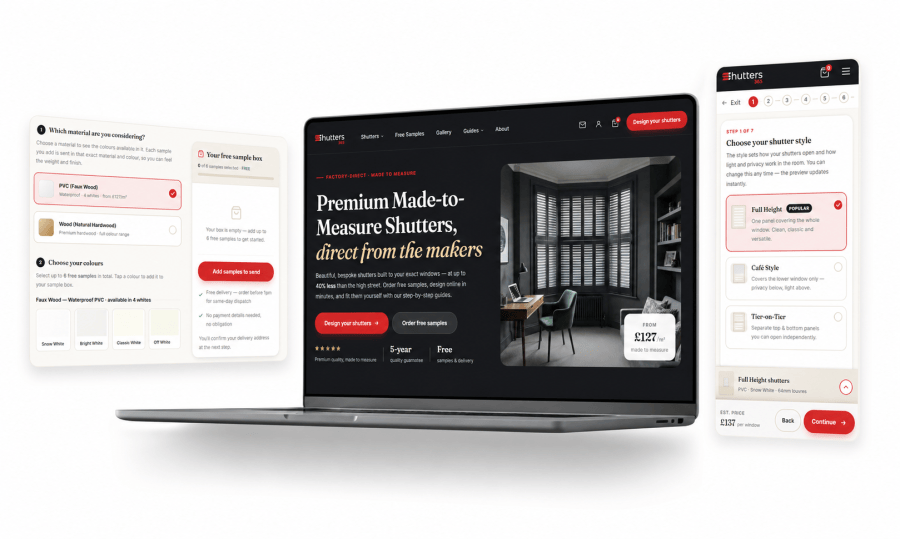
In February 2024, Appycodes worked through EU-selling options for an established UK medical supplier running WooCommerce. The delivery record shows the business comparing an IOSS-focused extension with a heavier EU VAT plugin that also promoted VAT-number validation. In the same discussion, the team considered euro presentment through a country-pricing extension and then a custom integration to load a euro price tier from the client's inventory system.
The difficult decision was not which plugin had the longest feature list. The broader VAT plugin offered validation, but Appycodes judged it heavy for the store. The lighter IOSS route did not answer how the catalogue's approved euro prices would arrive from the ERP. Meanwhile, Stripe's ability to take euros did not establish the product price, VAT route or customs handoff. Four concerns—tax collection, B2B VAT evidence, currency presentment and source-of-truth pricing—had been compressed into one “sell to Europe” request.
The practical lesson is durable: a checkout extension should not be allowed to invent the catalogue price, infer product origin or become the only record of why VAT was charged. For B2B routes, an EU VAT number can be checked through VIES, but that result is one tax-status input rather than a complete decision about the customer or transaction. European Commission: VAT identification and VIES
The Appycodes Border Readiness Gate
Score the proposed route from 0 to 3 across five gates: 0 means unknown or contradicted, 1 means discussed, 2 means configured and 3 means demonstrated with a completed test plus owned evidence. This is an Appycodes implementation model, not a compliance certification. A zero in VAT, customs or product blocks release regardless of total.
Country, buyer type, currency, language and returns promise
Approved route, rate source, registration, evidence and refund handling
Importer, commodity code, value, origin and carrier mapping
Safety, labelling, responsible person and restricted-goods checks
Dispatch, rejection, return, reshipment and reconciliation owners
A retailer might score Market 3, VAT 2, Customs 1, Product 0 and Operations 2: 8/15, hold. The zero is decisive. An attractive checkout cannot compensate for missing responsible-person details or an unapproved product listing. Under the EU General Product Safety Regulation, distance-sale offers in scope must visibly provide product identification, manufacturer details, the EU responsible person where required, and applicable warnings or safety information. Category-specific legislation may add more. EUR-Lex: General Product Safety Regulation, Article 19
A route table for the first implementation decision
| Order pattern | Starting route | Store must know | Do not assume |
|---|---|---|---|
| GB stock, EU consumer, eligible consignment ≤ €150 | IOSS candidate or a deliberately different import-charge route | Destination, VAT rate, IOSS eligibility, intermediary and carrier transmission | IOSS handles duty, product compliance or every carrier fee |
| GB stock, EU consumer, over €150 or excluded goods | Standard export/import design | Importer, delivery-charge promise, commodity code, origin, value and broker/carrier service | The customer will accept an unexpected collection request |
| NI stock, EU consumer | Union OSS review for distance sales | Actual NI dispatch, threshold position, destination rate and OSS evidence | A GB export declaration workflow belongs here |
| Stock already in an EU warehouse | EU domestic or intra-EU route review | Stock location, local registrations, destination and warehouse movement records | The UK seller's IOSS route covers EU-held stock |
| EU business customer | Separate B2B route | Customer tax evidence, contract, invoice, dispatch location and destination treatment | A syntactically valid VAT number decides the whole sale |
Do not market “zero duty from the UK” as a universal rule. The UK–EU agreement provides preference only when products meet the relevant rules of origin and the claim is supported. A product bought from a third country, stored in Britain and forwarded unchanged does not become UK-originating because the parcel has a UK return address. Start from the correct commodity code, then determine the product-specific origin rule and evidence. HMRC: UK–EU product-specific rules of origin
One order needs five evidence boundaries
The storefront should collect facts; a versioned rule service should classify the route; the order should store the result. Downstream systems then add their own evidence. This prevents a later VAT-rate, catalogue or plugin change from silently rewriting the explanation for an old order.
The tax ledger needs destination VAT and reporting periods. The product master needs commodity classification, origin evidence and the product information approved for each market. The customs payload needs descriptions, quantities, values, weights and parties. The carrier needs the fields its chosen service accepts. Reconciliation joins export proof, import result, VAT return, delivery, refund and return. These records share an order ID, but none should impersonate the others.
Implement the route as data, not theme conditionals
The classifier below is intentionally conservative. It chooses a review route; it does not calculate tax or declare an order compliant. Production code should receive approved country lists, VAT rates, exclusions and effective dates from owned configuration. The important part is that dispatch territory, customer type and consignment facts are inputs, and the selected version is stored with the order.
type SaleFacts = {
  dispatchFrom: 'GB' | 'NI' | 'EU';
  customer: 'B2C' | 'B2B';
  destinationIsEU: boolean;
  intrinsicGoodsValueEUR: number;
  containsExciseGoods: boolean;
};

type TaxRoute =
  | 'IOSS_CANDIDATE'
  | 'STANDARD_IMPORT_REVIEW'
  | 'NI_UNION_OSS_REVIEW'
  | 'EU_STOCK_REVIEW'
  | 'B2B_REVIEW'
  | 'NOT_EU_ROUTE';

export function classifyEuSale(f: SaleFacts): TaxRoute {
  if (!f.destinationIsEU) return 'NOT_EU_ROUTE';
  if (f.customer === 'B2B') return 'B2B_REVIEW';
  if (f.dispatchFrom === 'NI') return 'NI_UNION_OSS_REVIEW';
  if (f.dispatchFrom === 'EU') return 'EU_STOCK_REVIEW';

  if (
    f.dispatchFrom === 'GB' &&
    f.intrinsicGoodsValueEUR <= 150 &&
    !f.containsExciseGoods
  ) {
    return 'IOSS_CANDIDATE';
  }

  return 'STANDARD_IMPORT_REVIEW';
}

// Persist the decision; never recompute an old order from today's rules.
await orders.create({
  ...basket,
  taxRoute: classifyEuSale(facts),
  taxRuleVersion: 'eu-sales-2026-09-21',
  dispatchFrom: facts.dispatchFrom,
  destinationCountry: basket.destinationCountry,
  goodsValueEUR: facts.intrinsicGoodsValueEUR,
  commoditySnapshot: basket.lines.map(({ sku, commodityCode, origin }) => ({
    sku, commodityCode, origin,
  })),
});
Build the implementation in this order:
- Create a market-launch record. Name the EU countries, consumer or business route, dispatch warehouse, currencies, languages, returns address, payment methods and delivery promise. One approved row should be able to disable checkout for that market.
- Complete the product master. Store the commodity code, plain-language customs description, country of origin, weight, value basis, restricted-goods flags and product-compliance artefacts per SKU. Keep evidence and approver alongside the value, not in a spreadsheet that fulfilment cannot query.
- Design destination pricing. Decide whether a euro figure is converted live or comes from an approved price list. Then calculate tax and delivery separately. The Appycodes project record shows why an ERP euro tier and a currency plugin are different architectures.
- Freeze the checkout decision. Save the route, rule version, VAT rate and amount, dispatch origin, importer promise, product snapshots, shipping service and customer-facing total. Never rebuild an invoice from today's catalogue.
- Map carrier fields explicitly. Treat IOSS transmission, EORI, commodity codes, origin, values, descriptions and recipient data as a tested contract per service. Reject incomplete orders into an operator queue instead of producing a plausible label with missing facts.
- Test a real low-risk shipment. Confirm the customer total, export event, destination clearance, absence or presence of charges, tracking, delivery and documents. A label generated in sandbox proves only that the API accepted a payload.
- Reconcile exceptions and returns. Record rejected imports, address fixes, undelivered parcels, refunds, returned goods, replacement shipments and tax adjustments. A return crossing the border is an operational flow, not merely a refund button.
Common failure modes we design out
A live converter overwrites an approved market price or margin.
Keep price-list, currency and tax decisions as separate fields.Checkout charges VAT but the carrier payload or monthly evidence cannot be reconciled.
Store route and reporting identifiers server-side; limit their exposure.Origin is guessed from the warehouse rather than supported by product evidence.
Approve origin per SKU and rule version.The storefront promise and carrier service disagree about who pays import amounts.
Test the commercial promise against a real clearance event.Required responsible-person, warning or traceability information is absent from the offer.
Gate product publication by market, not only by language.The parcel, import record or replacement remains unresolved after money returns.
Model refund, return and reshipment as linked but separate states.Also distinguish marketplace responsibility from direct-store responsibility. A marketplace may be deemed supplier for some VAT purposes, but that does not automatically move every customs, consumer, product-safety or fulfilment obligation. Record who owns each gate for the exact channel and route; do not copy settings from a marketplace account into the direct website.
What Appycodes recommends after real implementations
Start with a small approved catalogue, one dispatch warehouse and one carrier service. Use the Border Readiness Gate and review every exception daily before expanding.
Let extensions calculate or transmit where useful, but persist the route, evidence and carrier mapping outside theme logic. Performance and upgrade risk belong in the decision.
Validate and retain customer tax evidence, contract the delivery terms and build an invoice path that does not inherit consumer IOSS assumptions.
Merchant, importer, deemed-supplier treatment, warehouse and fulfilment owner can differ per order. Put the allocation into the ledger and support tooling.
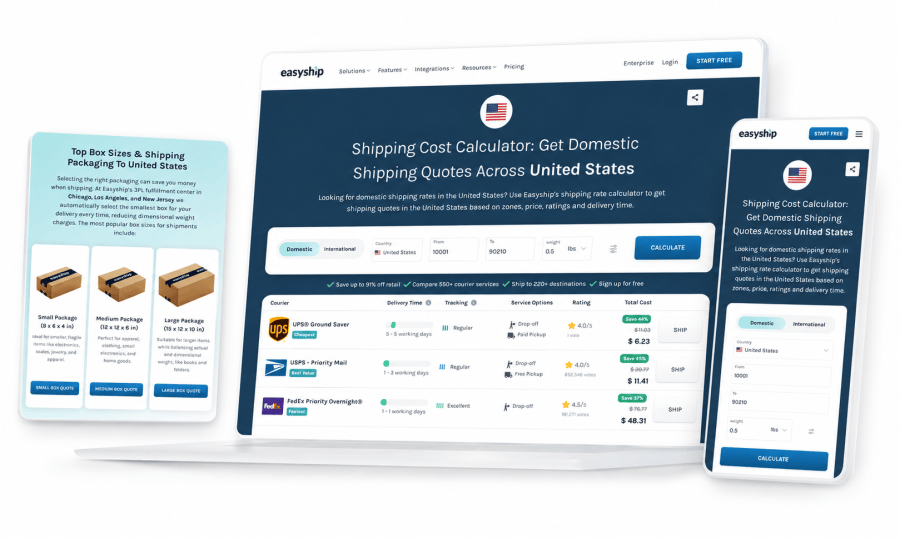
Our rule is to make the commercial promise only after the systems can reproduce it. The UK medical-supplier project exposed the trap: IOSS, VAT-number validation, euro pricing and the ERP catalogue looked like one feature but had different owners and failure modes. Our work with the Creoate cross-border marketplace and Easyship shipping calculators reinforces the same architecture: pricing, tax, customs and fulfilment remain explicit services joined by durable order facts. Appycodes implements these boundaries through our web and commerce engineering service.
Frequently asked questions
- Does a UK ecommerce business need IOSS to sell to EU consumers?
- Not for every sale. IOSS is an optional VAT simplification for eligible distance sales of imported goods in consignments not exceeding €150. A UK seller using it generally appoints an EU-established intermediary. Orders outside that route need a standard import design, with the importer, VAT, duty and customer-charge experience agreed separately.
- Does the UK–EU trade agreement mean every parcel is duty-free?
- No. Zero tariffs depend on the goods meeting the relevant rules of origin and on the required claim or evidence. Dispatching an item from the UK does not by itself make that item UK-originating.
- Is selling from Northern Ireland to the EU the same as selling from Great Britain?
- No. Goods moving from Northern Ireland to EU consumers follow a distinct VAT route, and eligible distance sales may use the Union OSS scheme. Great Britain exports to the EU follow the export and import route. Store the dispatch territory on every order rather than inferring it from the company address.
- Can a WooCommerce or Shopify plugin make a store EU-compliant?
- A plugin can calculate or transmit part of the flow, but it cannot establish product origin, appoint the importer, create missing product-safety evidence, guarantee carrier data quality or reconcile tax and customs records. Treat plugins as adapters inside an owned operating model.
Primary sources
- HMRC: VAT on goods exported from the UK (Notice 703)
- GOV.UK: get an EORI number
- European Commission: register for OSS and IOSS
- European Commission: low-value consignments and IOSS
- HMRC: VAT One Stop Shop for Northern Ireland
- HMRC: UK–EU product-specific rules of origin
- European Commission: VAT identification numbers and VIES
- EUR-Lex: General Product Safety Regulation
Technical and operational guidance, not legal, tax, customs, financial or product-compliance advice. Rules and carrier services change; have qualified advisers approve the route and re-check primary sources before launch.
UK topic cluster
Payments & ecommerce
Checkout, tax, fulfilment and cross-border decisions for UK operators.
Related guide
Stripe methods for UK businesses
Choose payment methods only after billing and fulfilment boundaries are clear.
Case study
Creoate wholesale marketplace
Cross-border marketplace engineering across catalogue, payments and operations.