



TL;DR
- The seat break-even point moved in 2026 and nobody recalculated. Retool's repricing (Business at $65 per builder per month, month-to-month, with separate builder / internal / external user tiers) pulls the crossover against a custom panel down from 32 seats to 22 in our model. Most build-vs-buy spreadsheets were last opened in 2024.
- At 5 users, low-code wins and it is not close. Retool runs $21,780 over three years and Appsmith $19,950, against $40,020 for a custom Next.js plus Supabase panel. At 100 users it inverts hard: $113,040 on Retool against $42,180 custom, a 2.7x gap, because the custom number barely notices headcount.
- The licence table is not the whole bill. Someone still builds and maintains the Retool apps (about $14,400 over three years in our time-sheet data), and workflow-heavy features carry a positive Customisation Debt Delta: they take longer to build on the platform than in code. Meanwhile 35% of teams have already replaced a SaaS tool with a custom build and 78% plan more custom tooling in 2026.
Build versus buy for internal tools is usually argued from instinct. The engineer wants to build, the finance lead wants a subscription, and the deciding artefact is a spreadsheet somebody made in 2024 and never opened again. In 2026 both sides of that spreadsheet moved at once. Retool restructured its price list: the Business tier now bills builders at $65 per builder per month on month-to-month terms, splits every account into builders, internal users and external users, and bundles AI credits into the tiers. At the same time, AI-assisted engineering kept compressing the hours it takes a senior team to ship a custom panel. Two moving inputs, one stale spreadsheet.
The wider market has already started re-running the numbers. VentureBeat's 2026 reporting on enterprise tooling found that 35% of teams have replaced at least one SaaS tool with a custom build, and 78% plan more custom tooling in 2026. The stated reason is nearly always the same: AI lowered the cost of building software, and the per-seat bill did not follow it down.
So we rebuilt the spreadsheet properly. This post prices the same admin panel three ways, Retool Business, Appsmith Business, and a senior-built Next.js plus Supabase panel, at three team sizes (5, 25, and 100 users) over three years. Three metrics fall out of the model: T3TCO (3-Year Total Cost of Ownership), SBP (Seat Break-Even Point), and CDD (Customisation Debt Delta).
One bias declared up front: we sell custom builds. Our own internal tools and admin dashboards page literally says "Not Retool dashboards. Real platforms the business runs on." The way we keep the model honest is to publish every assumption, keep the arithmetic reproducible in one screen of code, and let low-code win the scenarios it genuinely wins. As you will see, it wins more of them than you might expect an agency that builds the alternative to admit.
Methodology and price sources
The model prices one reference tool over 36 months. "The same admin panel" means a fixed scope drawn from the median internal-tool engagement in our books: 8 to 12 screens over an existing Postgres or MySQL database, three user roles, one approval flow with an audit log, two scheduled jobs, and basic charting. Every path pays for four cost lines:
- Licences, the per-seat platform bill over 36 months. Zero for the custom path.
- Initial build, the hours to get the reference scope live, priced at a blended senior rate. Low-code does not remove this line; it shrinks it.
- Maintenance, the monthly hours to keep the tool matching the business: new columns, new roles, changed workflows, breakage.
- Infrastructure, hosting and database. Zero on the vendor-cloud low-code paths, real but small on the custom path.
Licence pricing comes from the published 2026 lists: retool.com/pricing for Retool and Appsmith's pricing page for Appsmith. For the background on what changed in the 2026 Retool repricing we leaned on the Automation Atlas explainer and Appsmith's own teardown of Retool pricing, read with the obvious caveat that the latter is written by a competitor.
Build and maintenance hours come from our own engagement time-sheets across real internal-tool projects, 2023 to 2026: the PES tendering ERP, the All White Laser contract platform, the Easyship calculator surfaces, and our own NEXIS CA Compliance Calendar, plus platform-side hours from engagements where we inherited or maintained existing Retool and Appsmith workspaces. The named clients gave consent for the figures quoted; hour data is aggregated across engagements and rounded. Everything is priced at a $75 per hour blended senior rate, which sits mid-range in the freelance-rate data we published in tech stacks clients pay for vs what developers want.
We deliberately excluded the costs that are identical across all three paths: the database that already exists, staff training, and the operator hours spent inside the tool once it works. One asymmetry we chose not to price but should flag: on the platform paths, several things a growing company eventually needs (SSO, granular audit logs, environment separation) sit in higher tiers than the one we modelled, so the platform columns below are, if anything, floors rather than ceilings.
The model: one admin panel, three ways to pay for it
The headline metric is a straight sum of the four cost lines:
T3TCO = Licences (36 mo) + Build hours x rate + Maintenance hours x rate + Infrastructure (36 mo)
The whole model fits in one function, which is the point: if you disagree with an input, change it and re-run. Nothing below depends on a hidden tab.
const RATE = 75; // blended senior rate, USD/hour
const MONTHS = 36;

type Path = {
  licencePerMonth: (seats: number) => number; // builders + users blended
  buildHours: number;
  maintHoursPerMonth: number;
  infraPerMonth: number;
};

function t3tco(p: Path, seats: number): number {
  const licences = p.licencePerMonth(seats) * MONTHS;
  const build = p.buildHours * RATE;
  const maintenance = p.maintHoursPerMonth * MONTHS * RATE;
  const infra = p.infraPerMonth * MONTHS;
  return licences + build + maintenance + infra;
}

// Retool Business, month-to-month: $65/builder + $25/internal user
// Appsmith Business, cloud: $15/user, flat
// Custom Next.js + Supabase: no licences, $70 to $130/mo infra| Path | Licence model | Initial build (hrs) | Maintenance (hrs/mo) | Infra ($/mo) |
|---|---|---|---|---|
| Retool Business (month-to-month) | $65 / builder + $25 / internal user | 120 | 2.0 | 0 |
| Appsmith Business (cloud) | $15 / user, flat | 140 | 2.5 | 0 |
| Custom Next.js + Supabase | None | 320 | 5.0 | 70 to 130 |
Two assumptions worth pausing on. First, the builder mix: we model 2 builders at 5 and 10 seats, 4 at 25, 5 at 50, and 6 at 100, with the remainder as internal users at the $25 modelled rate; this roughly tracks the builder-to-viewer ratios we see in inherited workspaces. Second, the low-code build line is not zero. 120 hours to ship the reference scope on Retool is what our time-sheets say a competent builder actually takes once you count resource wiring, permissions, query optimisation, and the last 20% of polish the demo never shows. Anyone modelling low-code at zero build cost is comparing a finished custom panel to an empty Retool workspace.
At 5 users: low-code wins, and it is not close
Chart 1: 3-year TCO at 5 users
Reference admin panel, 36 months, 2 builders + 3 internal users on the Retool path. All figures USD, rounded.
| Cost line | Retool | Appsmith | Custom |
|---|---|---|---|
| Licences (36 mo) | $7,380 | $2,700 | $0 |
| Initial build | $9,000 | $10,500 | $24,000 |
| Maintenance (36 mo) | $5,400 | $6,750 | $13,500 |
| Infrastructure | $0 | $0 | $2,520 |
| T3TCO | $21,780 | $19,950 | $40,020 |
Sources: Retool 2026 price list, retool.com/pricing (https://retool.com/pricing); Appsmith pricing, appsmith.com (https://www.appsmith.com/pricing); Appycodes internal-tool engagement time-sheets, 2023 to 2026. Modelled at a $75/hour blended senior rate over 36 months. Figures rounded.
At 5 seats the custom panel costs roughly double either low-code path, and Appsmith is the cheapest option in the entire model. The licence line is a rounding error at this size ($7,380 on Retool over three full years); what the platforms are really selling you is 200 build hours you do not spend. If we were advising a 5-person operations team with a CRUD-shaped problem and no engineers on staff, we would not pitch them a custom build, and this table is why.
Note what the custom column is buying, though, because it matters later: the $40,020 is front-loaded and then flat. $24,000 of it is a one-time build, and the running cost is about $445 a month regardless of how many people log in. The low-code columns are the mirror image: cheap to start, and priced per person, forever.
At 25 users: the crossover nobody recalculated
Chart 2: 3-year TCO at 25 users
Same scope, 36 months, 4 builders + 21 internal users on the Retool path. The Retool column has now crossed the custom column.
| Cost line | Retool | Appsmith | Custom |
|---|---|---|---|
| Licences (36 mo) | $28,260 | $13,500 | $0 |
| Initial build | $9,000 | $10,500 | $24,000 |
| Maintenance (36 mo) | $5,400 | $6,750 | $13,500 |
| Infrastructure | $0 | $0 | $2,520 |
| T3TCO | $42,660 | $30,750 | $40,020 |
Sources: Retool 2026 price list, retool.com/pricing (https://retool.com/pricing); Appsmith pricing, appsmith.com (https://www.appsmith.com/pricing); Appycodes internal-tool engagement time-sheets, 2023 to 2026. Modelled at a $75/hour blended senior rate over 36 months. Figures rounded.
This is the table that changed in 2026. At 25 seats, Retool ($42,660) is now more expensive over three years than the custom panel ($40,020). The gap is small, 7%, which is exactly the problem: a crossover this shallow is invisible unless someone actually re-runs the model, and in most companies nobody owns that job. The tool was cheaper when it was adopted at 8 seats, the team grew, and the spreadsheet that justified the decision was never opened again.
Appsmith, at $30,750, is still comfortably cheaper here, mostly because it does not split builders from users: everyone is $15. If your team is genuinely in the 20 to 40 seat band and staying there, the honest reading of this chart is "Appsmith or custom, and Retool only if you are already deeply invested in it".
At 100 users: the per-seat bill becomes the product
Chart 3: 3-year TCO at 100 users
Same scope, 36 months, 6 builders + 94 internal users on the Retool path. Custom infra stepped up to $130/mo at this scale.
| Cost line | Retool | Appsmith | Custom |
|---|---|---|---|
| Licences (36 mo) | $98,640 | $54,000 | $0 |
| Initial build | $9,000 | $10,500 | $24,000 |
| Maintenance (36 mo) | $5,400 | $6,750 | $13,500 |
| Infrastructure | $0 | $0 | $4,680 |
| T3TCO | $113,040 | $71,250 | $42,180 |
Sources: Retool 2026 price list, retool.com/pricing (https://retool.com/pricing); Appsmith pricing, appsmith.com (https://www.appsmith.com/pricing); Appycodes internal-tool engagement time-sheets, 2023 to 2026. Modelled at a $75/hour blended senior rate over 36 months. Figures rounded.
At 100 seats the inversion is total. Retool costs 2.7x the custom panel over three years; Appsmith costs 1.7x. The licence line alone on Retool ($98,640) is more than double the entire lifetime cost of building and running the custom alternative. And notice the custom column's response to a 20x increase in users since Chart 1: the infrastructure line went from $2,520 to $4,680. That is the whole difference. Postgres does not care how many staff members have a login.
There is also a hidden fifth cost line that only appears at this scale: seat management itself. At 100 users someone has to audit who is a builder and who is a viewer, chase departed employees off the licence, and negotiate the renewal. In the workspaces we have inherited, that admin overhead ran 2 to 4 hours a month, unbudgeted, and the builder count quietly crept upward because reclassifying people downward is a conversation nobody wants to have. Per-seat products are optimised to grow inside your organisation; that is not a criticism, it is their business model working as designed.
This is also the point where the comparison stops being about money and starts being about what the tool is. A 100-user internal platform is not a side dashboard any more, it is the operational system of record, the screen the business actually runs on. The question "should the system of record live on a per-seat rental?" answers itself for most operators once it is phrased that way.
The seat break-even point moved in 2026
Collapsing the three tables into one curve gives the second metric, the seat count at which the platform path and the custom path cost the same over three years:
SBP = Seat count at which T3TCO (platform) = T3TCO (custom)
Chart 4: T3TCO by seat count, all three paths
3-year totals at five team sizes. Retool crosses custom at 22 seats; Appsmith at about 43.
| Seats | Retool | Appsmith | Custom |
|---|---|---|---|
| 5 | $21,780 | $19,950 | $40,020 |
| 10 | $26,280 | $22,650 | $40,020 |
| 25 | $42,660 | $30,750 | $40,020 |
| 50 | $66,600 | $44,250 | $41,100 |
| 100 | $113,040 | $71,250 | $42,180 |
Sources: Retool 2026 price list, retool.com/pricing (https://retool.com/pricing); Appsmith pricing, appsmith.com (https://www.appsmith.com/pricing); Appycodes internal-tool engagement time-sheets, 2023 to 2026. Modelled at a $75/hour blended senior rate over 36 months. Figures rounded.
On the 2026 price card, the Retool line crosses the custom line at 22 seats. We ran the identical model against the pre-2026 card we used in client work through 2024 ($50 per builder, $15 per standard user, annual billing), and the crossover sat at 32 seats. The repricing moved the break-even roughly a third closer, and it did so quietly, inside a tier restructure that most finance teams experienced as "the invoice got more complicated" rather than "the build-vs-buy answer changed".
The one-line version for your own numbers: divide the fixed-cost gap between the paths by the per-seat licence cost over the window. In this model the custom path carries $40,020 of fixed cost against $14,400 of platform-side build and maintenance, and a blended Retool seat costs $1,188 over 36 months, so ($40,020 - $14,400) / $1,188 lands at 22 seats. Swap in your own rate, your own builder mix and your negotiated seat price and the same division gives your SBP in thirty seconds.
Appsmith's flat $15 keeps its crossover out at about 43 seats, which matches its position in this market: the value option that makes the rental model defensible for longer. But the direction of travel is the same on both curves. Per-seat pricing plus growing headcount has one asymptote, and it is not in the buyer's favour. A team of 12 that expects to be a team of 40 in two years should read this chart at 40, not at 12.
Customisation Debt Delta: the cost the price list hides
T3TCO treats the two paths as delivering the same tool, and for the reference scope they do. The divergence shows up on the roadmap: what happens when the business asks for the next feature. We measure that with the third metric:
CDD = Σ (platform hours - custom hours) per roadmap feature
Chart 5: Customisation Debt Delta (CDD) by feature class
Median hours to ship each feature class on a low-code platform vs in a custom codebase, from our engagement time-sheets. Negative CDD favours the platform.
| Feature class | Platform (hrs) | Custom (hrs) | CDD |
|---|---|---|---|
| CRUD table with filters and exports | 6 | 14 | -8 |
| Role-gated views (3 roles) | 10 | 12 | -2 |
| Approval workflow with audit log | 26 | 18 | +8 |
| Scheduled reconciliation job with retries | 22 | 12 | +10 |
| Reminder pipeline (email + WhatsApp) | 24 | 14 | +10 |
| External customer portal page | 30 | 16 | +14 |
Sources: Retool 2026 price list, retool.com/pricing (https://retool.com/pricing); Appsmith pricing, appsmith.com (https://www.appsmith.com/pricing); Appycodes internal-tool engagement time-sheets, 2023 to 2026. Modelled at a $75/hour blended senior rate over 36 months. Figures rounded.
The pattern is consistent across our time-sheets: anything CRUD-shaped is faster on the platform, anything workflow-shaped is faster in code. The platform's advantage is a library of pre-built components; its disadvantage is that the moment a feature does not match a component, you are writing code anyway, inside a sandbox, against an API surface you do not control, with the debugging tools the vendor chose to give you. Across a representative 12-feature roadmap from our engagement history, the classes above sum to a CDD of +41 hours, about $3,075 at the blended rate, per roadmap cycle, in the platform's disfavour.
CDD is also the number that compounds. A positive delta on every workflow feature means the platform tool drifts further behind the business each quarter, which is exactly the drift pattern we keep finding when we audit older codebases: the Series A codebase audit found the same shape in a different costume, tools that were fast to start and expensive to keep matching reality.
Where low-code genuinely wins
An honest model has to report the scenarios where the rental is the right answer, because there are several, and we decline work in them regularly:
- Under 10 seats. Chart 1 is unambiguous. At 5 seats you are paying roughly 2x for a custom build, and the premium buys you nothing the team will notice for years.
- CRUD-only against a clean schema.If the tool is genuinely tables, filters, forms and exports, the negative-CDD rows are your whole roadmap and the platform's component library is doing exactly what it is priced for.
- No engineers on staff.A custom panel needs someone to own it. If the organisation has no engineering function and no plans for one, the platform's maintenance model is worth its premium.
- Planned lifetime under 18 months. Migration tooling scaffolds, one-off data-cleanup consoles, tools for a process being sunset: the build cost never amortises, so minimise it.
- Speed to first screen.A competent builder gets a usable Retool screen in front of an operations team in days. When the tool's value is proving whether anyone will use it at all, that speed is the product.
There is also a hybrid pattern the model quietly endorses: rent first, build second. A Retool v1 at 5 seats costs $21,780 over three years, and if the tool earns its keep and the team grows, the finished workspace becomes the best requirements document the eventual custom build will ever have. Every screen, every query, every permission rule has been argued about and settled by real operators. Migrations we have run from a mature platform workspace land at 60 to 70% of an equivalent greenfield build for exactly that reason: the expensive part of software is discovering what it should do, and the rental already paid for the discovery.
Our service page says it plainly: generic Retool dashboards that a junior engineer can ship in a week are listed under "probably not a fit", because we would be expensive for that job. This model is the arithmetic behind that sentence.
Where the model inverts
External users
Every number above prices internal seats. The moment customers or counterparties need a login, per-seat pricing meets an audience you do not control the size of. The PES platform manages around 300 industrial and commercial energy clients; give each of them portal access on a per-external-user price and the licence line stops being a rounding error. Even at a modelled $10 per external user per month, 300 counterparties add $108,000 over three years, two and a half times the entire T3TCO of the custom panel. All White Laser is the same story: the contract portal exists precisely so that customers, not staff, can sign in against 500 contract documents stored on Cloudflare R2. A tool whose point is external access should never be priced per external head.
Complex workflows
The positive-CDD rows in Chart 5 are the second inversion. The PES tender module ingests supplier responses from across the UK energy market, normalises them into comparable formats, surfaces the best deal per client, and reconciles multi-year supply-agreement commissions, logic that has saved 800+ broker hours a year and puts $1M+ in tenders through the platform. None of that maps to a drag-and-drop component. The NEXIS CA Compliance Calendar runs GST, ROC and Income Tax deadlines across clients and team members with WhatsApp reminders via wa.me, a classic reminder-pipeline feature class at +10 CDD. When the roadmap looks like this, the workflow engine is the product, which is why this class of build usually pairs with workflow automation development rather than a component library.
Per-seat growth
The third inversion is simply Chart 4 read forward in time. Headcount growth doubles the licence line and leaves the custom line flat; on the 2026 card the crossover arrives at 22 seats, which many companies pass without noticing. If your operations team is hiring, the honest comparison is not today's seat count but the seat count at the end of the three-year window you are modelling.
The data layer outlives the tool
One structural argument sits underneath all three: a custom panel leaves you owning a schema, a set of policies, and an API, assets that survive any UI decision you make later. Our default data layer for this class of build is Postgres with row-level security and multi-role auth on Supabase, which is exactly how the NEXIS calendar separates its Admin, Team and Client roles. A platform workspace, by contrast, is a UI you rent on top of a database you own; when you leave, the UI stays behind.
The four dashboards behind our side of the ledger
The custom-path hours in this model are not estimates; they are the logged shape of four platforms currently in production, each the operational heart of the business that runs on it.
PES is a tendering ERP for a UK energy brokerage: tender comparison across the supplier market, a CRM for roughly 300 industrial and commercial clients, and commission accounting for multi-year supply agreements. $1M+ in tenders flows through it, and it has saved 800+ broker hours a year against the spreadsheet process it replaced. All White Laser runs contract operations on it: contract creation, payment scheduling, a customer portal, and document storage on Cloudflare R2, with $5M in contracts across 500 contract documents on the platform.
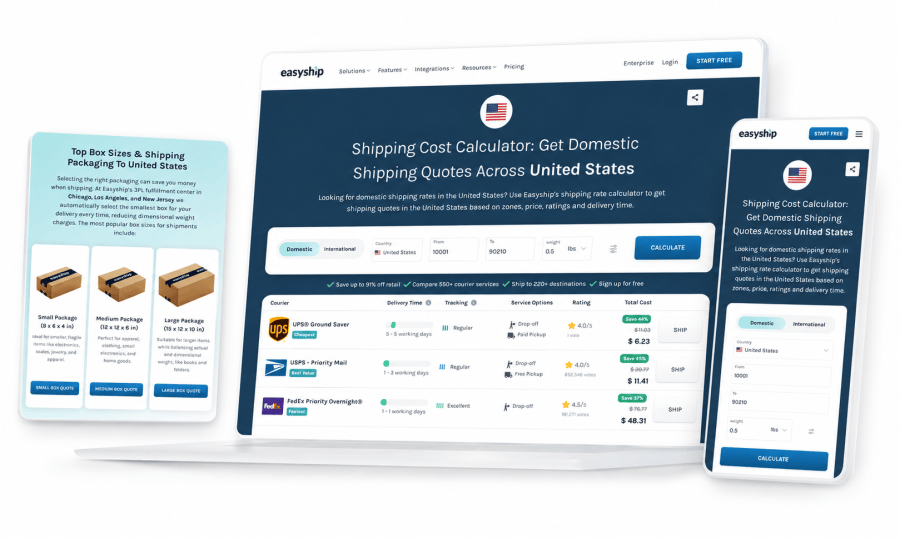
NEXIS CA Compliance Calendar is our own ecosystem product, built for practising Indian CAs: GST, ROC (MCA) and Income Tax deadlines (TDS, advance tax, ITR) tracked across clients and team members, three roles (Admin, Team, Client), WhatsApp reminders via wa.me, on React plus Supabase plus Resend, and it was built in Lovable. That last fact matters for this post: the initial-build line on the custom path has been falling for exactly the reason the VentureBeat data describes. Easyship is the outlier that proves the category boundary: 100+ shipping rate calculators aggregating rates across 550+ courier integrations, with every origin-destination pair published as a separate indexable landing page. An internal calculation engine doubling as a public programmatic-SEO surface is not something any per-seat platform has a price for.
This is what the "Not Retool dashboards" line on the service page actually means. It is not a claim that Retool is bad; Charts 1 and 2 show it winning. It is a claim about which half of the market we build for: the half where the business logic is the product, and where the tool's cost should not scale with the number of people who look at it.
Limitations and how to read this model critically
First, the blended rate. $75 an hour is our number; a Bay Area contractor at $150 doubles every hour-priced line and pushes the SBP up substantially, while an internal engineer whose salary is already sunk pushes it down. Re-run the model with your rate before quoting it in a meeting.
Second, list prices move and negotiated prices differ. We modelled month-to-month Business-tier list pricing; annual commitments and enterprise agreements discount it, sometimes heavily, and every discount pushes the break-even seat count back up. The model is a snapshot of the published 2026 card, not of your procurement team's best day.
Third, the build hours assume senior engineers who have shipped this exact class of tool before. A team learning Next.js and Supabase on the job will not hit 320 hours, and a founder vibe-coding the panel will produce a different artefact with different risks, a pattern we documented at length in the AI-prototype audit. Our sample is also biased in a direction worth naming: businesses come to us when their logic has outgrown off-the-shelf tools, so our time-sheets over-represent workflow-heavy builds and under-represent the simple CRUD tools where low-code shines.
Fourth, T3TCO is nominal dollars over 36 months. We apply no discount rate, model no platform price rises after the 2026 card, and give no dollar value to the optionality of quitting a month-to-month subscription, which is real and favours the platforms. The Appsmith self-hosted community edition, at zero licence cost plus ops hours, is a legitimate fourth path we left out to keep the comparison to paid, supported tiers.
How to run this model for your own team
Four inputs decide the whole thing: your seat count at the end of the window (not the start), your builder-to-user mix, your hourly rate, and the share of your roadmap that is workflow-shaped rather than CRUD-shaped. Put those into the function above and the answer usually falls out in a page. If the result lands under 10 seats and CRUD-only, rent the tool with our blessing. If it lands past 22 seats or the CDD rows dominate your roadmap, the arithmetic has changed since your spreadsheet was last open, and the numbers in this post are what it changed to. For a sense of what the initial-build line looks like on real invoices, what an MVP actually costs in 2026 covers the same hour-and-rate anatomy across 31 engagements. And if you would rather we ran the model against your actual tool list, send us the spreadsheet you have been avoiding.
The research that pairs with this model:
Research
What an MVP Actually Costs in 2026: Three Founder Stories + 31 Engagements of Data
Three founder stories of 2026 MVP builds, fintech, AI SaaS, marketplace, followed by aggregate cost and bandwidth data across 31 engagements.
Research
Series A Code Audit: Inside 23 Funded SaaS Codebases
Patterns from 23 SaaS codebase audits: opens with one anonymised takeover, then aggregates the rubric findings. TDS, KPC, MTS.
Research
Tech stacks clients pay for vs what developers actually want, 2026 data report
12 web stacks compared across usage, developer preference, client demand and freelance rate, the source of the blended rate this model runs on.
The engagements that map to the custom side of the ledger:
Service
Internal Tools & Admin Dashboards
Tender automation, contract operations, compliance calendars. Not Retool dashboards. Real platforms the business runs on.
Service
Workflow Automation Development
The approval chains, reconciliation jobs and reminder pipelines that carry a positive CDD on every low-code platform.
Service
Supabase Development
Postgres, row-level security and multi-role auth: the data layer that outlives whichever UI you put on top.
Frequently asked questions
- Is Retool worth it at 50 users?
- On pure cost, no. In our 3-year model, Retool at 50 seats costs about $66,600 against $41,100 for a senior-built custom panel, a 62% premium. It can still be the right call if your roadmap is genuinely CRUD-only, you have no engineers to maintain a custom codebase, or the tool has a planned lifetime under 18 months. Past 50 seats with any workflow complexity, the model says the per-seat bill is buying you convenience you already paid for in year one.
- What are the best Retool alternatives in 2026?
- Appsmith is the strongest like-for-like alternative: in our model it is the cheapest path at every seat count below about 43, and it has a self-hostable open-source core. Budibase and ToolJet cover the same self-hosted ground. Past roughly 22 seats against Retool and 43 against Appsmith, the strongest alternative in our data is not another low-code platform, it is a custom Next.js plus Supabase panel whose cost does not scale with headcount.
- What does a custom admin dashboard cost to build?
- For the reference scope in this model (8 to 12 screens, 3 roles, an approval flow with audit log, 2 scheduled jobs, basic charts), 320 senior hours, which is $24,000 at our $75/hour blended rate. Running costs add roughly $5,340 a year in maintenance and infrastructure, for a 3-year total of about $40,020. The key property is that this number is seat-independent: it is the same at 5 users and at 500.
- Can we migrate off Retool later?
- Yes, but plan for a rebuild, not a port. The SQL queries and JavaScript transform blocks inside a Retool app carry over almost verbatim; the UI and the resource wiring do not. In the migrations we have run, the finished Retool app is the best requirements document the project will ever have, which is why a migration typically lands at 60 to 70% of an equivalent greenfield build. The trap is per-seat lock-in: the longer you wait past your break-even seat count, the more licence spend you burn before the rebuild pays back.
- Did AI coding tools change the build-vs-buy maths?
- Yes, on the build side. VentureBeat's 2026 enterprise tooling data found 35% of teams have already replaced at least one SaaS tool with a custom build and 78% plan more custom tooling this year, with AI-lowered build cost as the stated driver. Our own NEXIS CA Compliance Calendar, a 3-role compliance tool on React, Supabase and Resend, was built in Lovable and then hardened by engineers. AI compresses the initial build line; it does nothing to the per-seat licence line, which is why the break-even keeps moving toward custom.