
saas web app development

    SaaS Web App Development for Startups

    A senior engineering team that ships production-grade SaaS — from first paying customer to Series A and beyond. React, Next.js, Node, PostgreSQL. Built for products that need to scale, not demos.

    SaaS web app development team building production software

    ■ Who this is for

    A good fit if you're building real SaaS

    • Funded SaaS founders building V1 or scaling toward Series A
    • Self-funded founders with a working prototype that needs to ship
    • Product teams that need senior engineering capacity without hiring
    • Companies migrating from no-code or AI-built prototypes to a real codebase
    • Existing SaaS products that need a rebuild or major architecture overhaul

    ■ Probably not a fit

    We'll be honest if it's the wrong call

    • Pre-idea founders looking for a technical co-founder
    • Projects that only need a marketing site or landing page
    • Engagements that need a single hourly contributor
    • Teams looking purely for the cheapest possible bid
    Featured client
    Rajasthan Royals logo

    Case Study · IPL Franchise · Internal Analytics SaaS

    Leading Edge

    Internal platform built

    BigQuery

    Backend data warehouse

    Stack

    React · Next.js · Node.js · BigQuery · Python

    ■ Real work · Featured engagement

    We built Leading Edge — the internal analytics platform that powers Rajasthan Royals

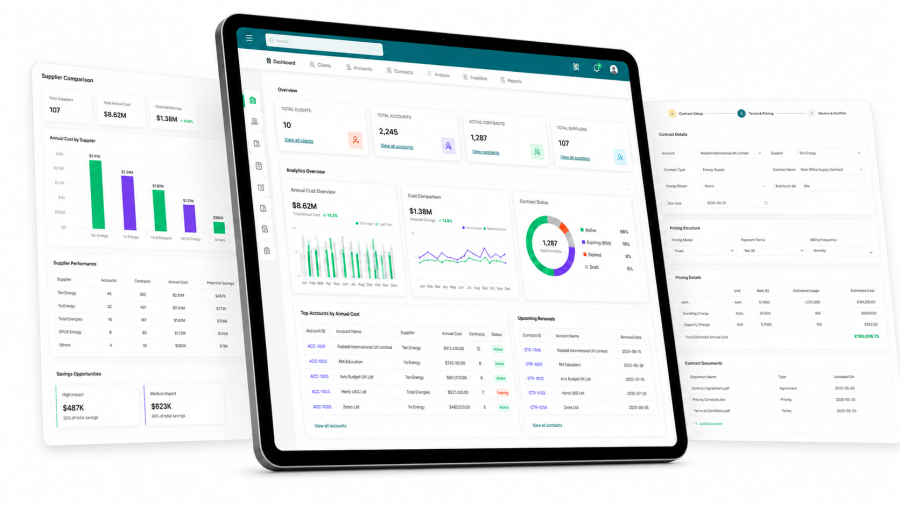
    Rajasthan Royals — one of the founding IPL franchises and the inaugural T20 champions — partnered with Appycodes to build their internal analytics SaaS platform, Leading Edge. The platform powers the decisions the cricketing operations team makes day to day: player scouting across the global player pool, the trade engine for IPL auction modelling, ongoing player analytics for every athlete on the roster, and projection models that feed match strategy.

    The data warehouse sits on Google BigQuery — every ball bowled across every competitive match the system tracks, ingested and structured. Most of the engineering challenge was not the front-end. It was the queries. Player scouting against multi-season ball-by-ball data, with strike-rate-against bowler-type filters, situational match-state segments, and venue-specific performance windows, runs across hundreds of millions of rows. Naive SQL costs minutes per query — unusable for an interactive scouting interface.

    We restructured the query layer with materialised views for the highest-frequency analytical paths, partitioned and clustered tables on the filters scouts actually use, pre-aggregated rolling windows on a scheduled pipeline, and pushed projection models out of the query path entirely into a Python service that returns pre-computed responses. Scouting queries that used to take minutes return in single-digit seconds. The trade engine, which models trade scenarios across BigQuery in near real time during the auction window, runs on the same architecture.

    Building software for an IPL franchise has a different bar than most SaaS work. The platform has to be right when the auction clock is running and millions of dollars of player contracts are on the line. We treated it that way from sprint zero.

    CREOATE logo

    Case Study · B2B Marketplace

    $5M+

    Funded by Fuel Ventures

    800K+

    Orders processed

    Stack

    React · Node.js · PHP · PostgreSQL

    ■ Real work

    How we helped CREOATE process 800,000+ orders

    CREOATE raised $5M from Fuel Ventures to build a B2B marketplace connecting independent retailers with global suppliers. The product needed to handle two distinct user journeys at the same time — buyers browsing thousands of SKUs, and suppliers managing inventory, orders, and payouts — without either side feeling slow.

    Our engineering team contributed across the React frontend, the Node.js services that power search and checkout, and the PHP layer that handles supplier-side order management. The hard part was not any single feature — it was keeping the marketplace responsive as catalog size, order volume, and supplier count grew in parallel.

    Eight hundred thousand orders later, the platform is still running on the same architectural decisions made in those early sprints — a hybrid database structure with DynamoDB on the catalog layer and MySQL on the dashboards side, with carefully chosen indexes, queue-backed background jobs for anything slower than 200ms, and a frontend that treats every network call as fallible by default.

    ■ Stack we'd pick today

    An opinionated SaaS stack — and why

    We are not stack agnostic. After building dozens of SaaS products, we have strong opinions about what is worth your time and what creates pain at month nine. Here's what we reach for by default. We deviate when there's a real reason — not because something is trending.

    Frontend — Next.js (App Router)

    Real server rendering, real routing, real image and font handling. We pick Next over Remix because the ecosystem and hiring pool is deeper, and because most SaaS frontends benefit more from incremental static rendering than from Remix's loader model.

    Backend — Node.js (Fastify) or Laravel

    Node + Fastify when the product is API-heavy and needs websockets or AI streaming. Laravel when the surface area is large CRUD, admin, and the team wants batteries-included. We avoid microservices until you genuinely need them — usually never for the first two years.

    Database — PostgreSQL

    Default for almost every SaaS. ACID transactions, JSON columns when you need flexibility, full-text search good enough for most products, and a clear path to read replicas when you scale. We use Mongo only when the data is genuinely document-shaped.

    Auth — Clerk or custom JWT + sessions

    Clerk if you want SSO, magic links, and org/team support without building it. Custom auth when you need full control over the session model — usually for products with strict tenancy or compliance needs.

    Billing — Stripe

    Plans, free trials, proration, usage-based metering, dunning. We have a reusable billing pattern that handles edge cases like mid-cycle plan changes, failed cards, and grandfathered pricing. Not glamorous — billing bugs lose customers fast.

    Hosting — Vercel + AWS or DigitalOcean

    Vercel for the frontend. AWS or DigitalOcean for the backend, database, queues, and storage. We avoid lifting and shifting onto any single PaaS that locks you in. Boring infrastructure ages well.

    ■ Real work

    100+ shipping calculators inside Easyship

    Easyship is a global shipping platform now valued at over $40M, helping merchants compare and book carriers across two hundred countries. The product runs on a deceptively complex set of calculators — every quote requires reconciling rate cards, customs rules, surcharges, and merchant-specific contracts in real time.

    We built and maintained many of these calculator engines in Vue, React and TypeScript, with Node services backing them. The interesting engineering was not the math — it was keeping the rules engine testable across all geographic and language combinations.

    Strong typing across the boundary between the calculator engine and the UI was the single highest-leverage decision. When the rates API updated their data structures and response formats, the failures were caught at compile time in a single sprint — not by a user complaining that their quote didn't work!

    Easyship logo

    Case Study · Shipping SaaS

    $40M+

    Company valuation

    100+

    Calculators shipped

    Stack

    React · TypeScript · Node.js · Vue.js

    ■ How we work

    From kickoff to live SaaS, in six steps

    01

    Discovery sprint

    One week. We map the product, users, business model, and the hard problems hiding under the surface. Output: a written architecture and a concrete plan for the first 90 days.

    02

    Architecture and stack lock

    We choose the stack, design the data model, and define the multi-tenancy approach before writing production code. Decisions get documented so the next engineer to join is not confused.

    03

    Sprint zero

    Auth, billing scaffolding, base UI system, CI/CD, and a deployable shell. By the end of sprint zero you have something a real human can log into.

    04

    Feature sprints

    Two-week sprints. Planning, build, demo, ship. You see progress every Friday. Scope changes get re-baselined at sprint boundaries, not mid-sprint.

    05

    Pre-launch hardening

    Performance pass, security review, load test against the realistic peak, error reporting and analytics wired up. Launch with monitoring already running.

    06

    Launch and 30-day stability watch

    We stay on full availability for the first month after launch. Real users find real bugs. Then we move into the standard maintenance and feature retainer if you want us to keep going.

    ■ Honest comparison

    Appycodes vs your other options

     FreelancerLocal agencyIn-house hireAppycodes
    Senior engineersMaybeMixedYes — once hiredYes
    Time to start1-2 weeks2-4 weeks6-12 weeks1-2 weeks
    Continuity if someone leavesHigh riskMediumYesBuilt in
    Familiar with funded SaaS contextRareSometimesIf you hire wellYes
    Owns code and IPMixedYesYesYes — fully
    Bug response after launchWhen availableBusiness hoursYesYes
    Operational overhead for youLowMediumHighestLow

    None of these options is universally right. Freelancers work for narrow, short tasks. In-house hiring is the right move when you have time and certainty. We tend to be the right call when you need senior delivery quickly, with continuity, without the overhead of an in-house team.

    ■ Questions we get

    Real questions from real founders

    If yours is not here, ask us directly.

    About the author

    Ritesh — Founder, Appycodes

    Ritesh leads engineering at Appycodes and has spent the last decade shipping SaaS products for funded startups across the UK, US, India and Australia — including CREOATE, Easyship, Khatabook, and others. His focus is on production engineering: the unglamorous decisions that keep a SaaS product fast, reliable, and easy to change six months after launch.

    Taking the first step is the hardest. We make everything after that simple.

    Let's talk today