
■ custom WordPress development for business
We treat WordPress as an application platform, not a CMS. Complex B2B marketplaces, membership sites, generators, internal tools, and bespoke business systems — engineered properly, deployed through CI, maintained for years.

■ Who this is for
■ Probably not a fit
■ WordPress patterns we specialise in
WordPress is a perfectly capable application platform when it's treated as one. These are the six WordPress build patterns we take on most often — and the ones where most "WordPress developers" get out of their depth.
Restricted content, recurring billing via Stripe or WooCommerce Subscriptions, drip courses, tiered access, member-only directories. We've shipped these for education bodies and professional associations.
Vendor onboarding, product catalogues, order management, payouts, escrow. Built as a custom plugin on top of WordPress's role and capability system, not stitched together from off-the-shelf themes.
WordPress as the editorial and content layer, served via REST API or WPGraphQL, with a React or Next.js frontend. Good fit when the frontend needs richer interactivity than PHP rendering gives you.
Courses, lessons, quizzes, certificates, progress tracking, instructor dashboards. Built either on LearnDash / LifterLMS, or fully custom when those plugins constrain the product.
Searchable article trees, role-based access, version-pinned content, multilingual variants, embeddable widgets. Often integrated with a forum or community surface.
WPML or Polylang for translations, hreflang done properly, region-specific pricing, CDN-aware caching. The unglamorous SEO work that makes international WordPress actually work.

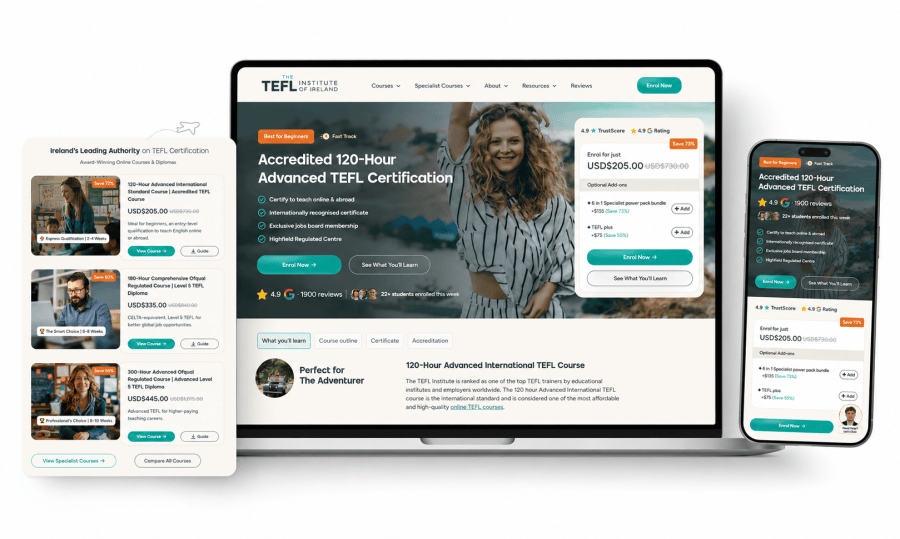
Case Study · LMS + Ecommerce on WordPress
Orders processed
Partnership
Stack
WordPress · WooCommerce · Custom plugins · PHP
■ Real work
TEFL Institute of Ireland runs an ecommerce and learning management platform that sells and delivers teaching qualifications worldwide. The platform has handled more than 100,000 orders, runs on top of WordPress and WooCommerce, and has been our client for more than ten years. That tenure tells you the platform has not stood still — courses, payment flows, certifications, and student dashboards have all been rewritten multiple times.
The interesting engineering was building the LMS and certification logic without abandoning WordPress. We wrote custom plugins for course delivery, integrated payment flows for international markets, and built the admin tools that the TEFL team uses daily to manage students and tutors. None of this was off-the-shelf — but using WordPress as the base meant the team kept an admin they already understood.
Ten years in, the platform still ships new features regularly. That only happens when the WordPress codebase is treated like software — proper version control, staging, code review, and custom plugins designed to be replaced one piece at a time.
■ How we approach WordPress
We have strong opinions on how WordPress should be built when the product matters. Here is what we reach for by default and the reasoning behind each choice. We deviate when there is a real reason — not because something is trending in the WordPress space.
Business logic belongs in plugins, not in functions.php or a child theme. Plugins are versioned, testable, replaceable, and survive theme switches. We write them with proper namespacing and clean APIs so the next engineer to touch the codebase isn't decoding 4,000 lines of theme glue.
Custom post types and meta boxes done well make WordPress feel like an application. We use ACF or Carbon Fields for the data model, not page builders. The editor stays simple. The data stays queryable. The admin stays fast.
WordPress core, themes, plugins, and custom code all in one git repo. Composer manages dependencies. CI runs tests and deploys to staging and production. The WordPress admin is for content, not for code changes — anything that touches code goes through the same pipeline as any serious application.
WooCommerce is the right base for product, cart, checkout, and order flows. We use it when the marketplace looks like commerce. When the model is genuinely bespoke — multi-vendor with custom margins, escrow, subscriptions with mid-cycle changes — we build the data model ourselves and integrate Stripe directly.
Headless WordPress with a Next.js or React front-end is great for performance and Core Web Vitals — but it costs you the editor preview experience. We go headless when the front-end demands it (a SaaS-style app, a complex marketplace UI). We stay monolithic when the editor team needs unified admin and live preview.
Cloudways or Kinsta when the team wants managed WordPress with object cache, edge cache, and a sane staging workflow. Self-hosted on AWS or DigitalOcean when the application is heavy enough that we want full control over Nginx, Redis, and the database. We avoid shared hosting for anything serious.
■ Real work
Hornet Security is a $200M ARR cybersecurity company. We developed six platforms for them, including their public-facing knowledge base and customer forum — both built on WordPress with custom plugin work that ties into their broader product ecosystem.
The challenge with knowledge bases at that scale is not the content — it's the search, the cross-referencing between articles, the multi-language structure, and the way edits flow through review before they go live. We built custom plugins to handle each of those, layered on top of WordPress's editor and user roles. The team that maintains the content didn't have to learn a new tool.
Building for a $200M ARR company means the platform has to be reliable in ways most WordPress sites are not. Background jobs for indexing. Granular permissions. Full audit trails. WordPress is more than capable of all of this when it's built that way from the start, not bolted on later.

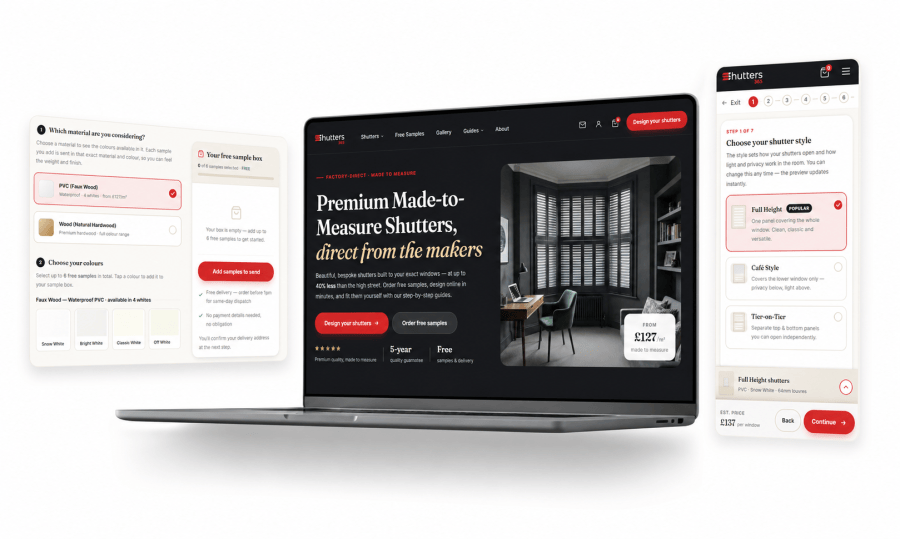
Case Study · Knowledge Platform
ARR company
Platforms developed
Stack
WordPress · PHP · Custom plugins
■ How we work
One week. We map the product, the user roles, the data model, and the parts of the business that the WordPress side actually has to support. Output: a written architecture, a plugin plan, and a concrete delivery plan for the first 90 days.
We choose the WordPress stack — hosting, base plugins, custom plugin structure, theme strategy, page builder vs custom blocks, headless or monolithic. Infrastructure is set up with staging, version control, CI, and backups before any production code lands.
Theme scaffolding, base custom plugins, ACF or custom post types, deploy pipeline, staging environment, and the WordPress admin set up the way the team will actually use it. By the end of sprint zero you can log into a working WordPress install and see the product taking shape.
Two-week sprints. Custom plugins shipped through CI, not through the WordPress admin upload screen. Every change reviewed. Scope changes get re-baselined at sprint boundaries, not mid-sprint. You see progress every Friday.
Performance pass — object cache, page cache, database tuning, plugin audit. Security pass — file permissions, hardened wp-config, automated backups, security headers. Load test against realistic peak. Launch with monitoring and uptime alerts already running.
We stay on full availability for the first month after launch. Real users surface real bugs. Then we move into the standard maintenance and feature retainer — most WordPress applications need one because of plugin updates, core updates, and security patches that need active management.
■ Honest comparison
| Page-builder agency | WP freelancer | In-house WP dev | Appycodes | |
|---|---|---|---|---|
| Custom plugin development | Limited | Mixed | Yes | Yes |
| Handles complex business logic | Rarely | Maybe | Yes — once hired | Yes |
| Builds B2B marketplaces / membership sites | No | Sometimes | If they prioritise it | Yes |
| Headless WordPress capability | Rarely | Rarely | Sometimes | Yes |
| Code in version control + CI | No | Mixed | Yes | Yes |
| Time to start | 1-3 weeks | 1-2 weeks | 8-16 weeks | 1-2 weeks |
| Continuity if someone leaves | Mixed | High risk | Yes | Built in |
None of these is universally right. A page-builder agency is fine for marketing sites. A WordPress freelancer is fine for narrow, focused tasks. We are the right call when the WordPress side is genuinely a business platform — complex enough that getting it wrong is expensive and getting it right requires real engineering.

About the author
Ritesh leads engineering at Appycodes and has spent the last decade shipping WordPress applications for serious businesses across the UK, US, India and Australia — including TEFL Institute of Ireland's LMS, Hornet Security's knowledge platform, PlusHeat's subscription system, and others. His focus is on production engineering: the unglamorous decisions that keep a WordPress platform reliable, fast, and easy to change years after launch.
■ Other services
Explore the rest of what we build.
MVP to production builds, multi-tenant, billing, AI features.
Learn moreiOS + Android in one codebase. Push, offline, OTA updates.
Learn moreConvert your Lovable / Claude / Bolt web app to React Native or Flutter — backend reused.
Learn morePrerender, schema, Core Web Vitals — engineering-led SEO.
Learn moreCustom themes, migration to Shopify, Shopify apps, supplier-feed automation.
Learn moreB2B wholesale, high-SKU catalogues, WooCommerce Subscriptions, Shopify-to-Woo migrations.
Learn morePost-launch stability, security, monthly improvements.
Learn moreTake an AI-built prototype to a production-ready product.
Learn moreConvert AI-built web prototypes into native mobile apps.
Learn moreSubmit, configure and optimise for App Store + Play Store.
Learn moreModernise legacy systems with zero-downtime migrations.
Learn moreEngineering capacity for agencies, under your brand.
Learn moreFrom idea to live product — design, build, launch, growth.
Learn moreCustom REST/GraphQL APIs and third-party integrations.
Learn moreMulti-tenant AI SaaS with subscriptions and admin dashboards.
Learn moreMarketplaces with credit, KYC, and trust infrastructure baked in.
Learn moreCustomised Moodle deployments and bespoke Moodle mobile apps.
Learn moreSubscription recovery, dunning, migrations, combinatorial billing matrices.
Learn moreMagento, WordPress, BigCommerce → Shopify. Redirect-engineering first.
Learn moreForensic incident response — Magecart, backdoors, DDoS, GDPR Art. 33.
Learn moreFour production Laravel platforms. ERPs, contracts, tendering.
Learn moreWebhooks, metering, proration, dunning, multi-currency, reconciliation.
Learn moreWorkers, R2, WAF, Bulk Redirects. The full surface, not just the orange cloud.
Learn moreTender automation, contract operations, compliance calendars, calculators.
Learn moreRLS, multi-role auth, production-hardening Lovable / Bolt / v0 prototypes.
Learn moreWP + Next.js with preview, ISR, auth handoff, media pipeline, search.
Learn moreSchema-first builds, multilingual setups, migrations from WP / Contentful / Strapi.
Learn moreFour production Vue platforms. Vue + Laravel as the default pairing.
Learn morenginx, PHP-FPM, slow-query analysis, plugin audit. Diagnostic engineering, not plugin installs.
Learn moreSurgical plugin work — namespaced, idempotent, version-controlled. Not functions.php.
Learn moreKB + forum + adjacent surfaces. Search, version-aware routing, role-based visibility.
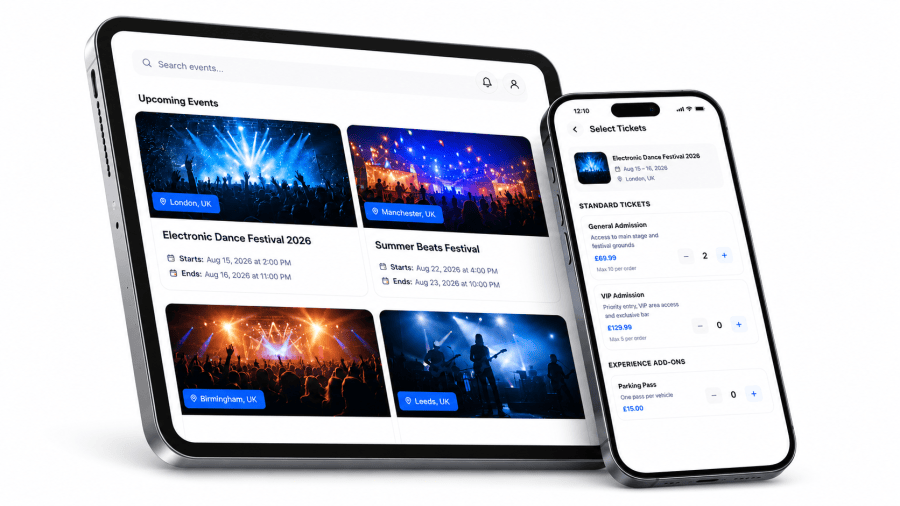
Learn moreMulti-day festivals, white-label venue groups, offline-capable door-staff apps.
Learn moreProduction RAG with chunking, hybrid retrieval, reranking, grounding, eval.
Learn moreMake.com, n8n, Zapier, and custom Node workers — chosen by volume.
Learn moreCalculator- and location-driven SEO surfaces with real data and SSR.
Learn more